When homeowners start looking at new doors, it’s easy for them to get lost in the details. Terms like “sightlines,” “panel configurations,” and “threshold options” might be second nature to us in the trade, but for many customers, they mean nothing. Add in the fact that bifolds and sliding doors often look similar from a distance, it’s no surprise they’re unsure which to choose.
The solution is to explain the options in clear, simple terms. In this blog, we’ll outline the key differences between bifold and sliding doors, highlight their benefits and drawbacks, and share how to match the right system to the right project so customers can make an informed choice with confidence.
Bifold Doors: Pros and Cons
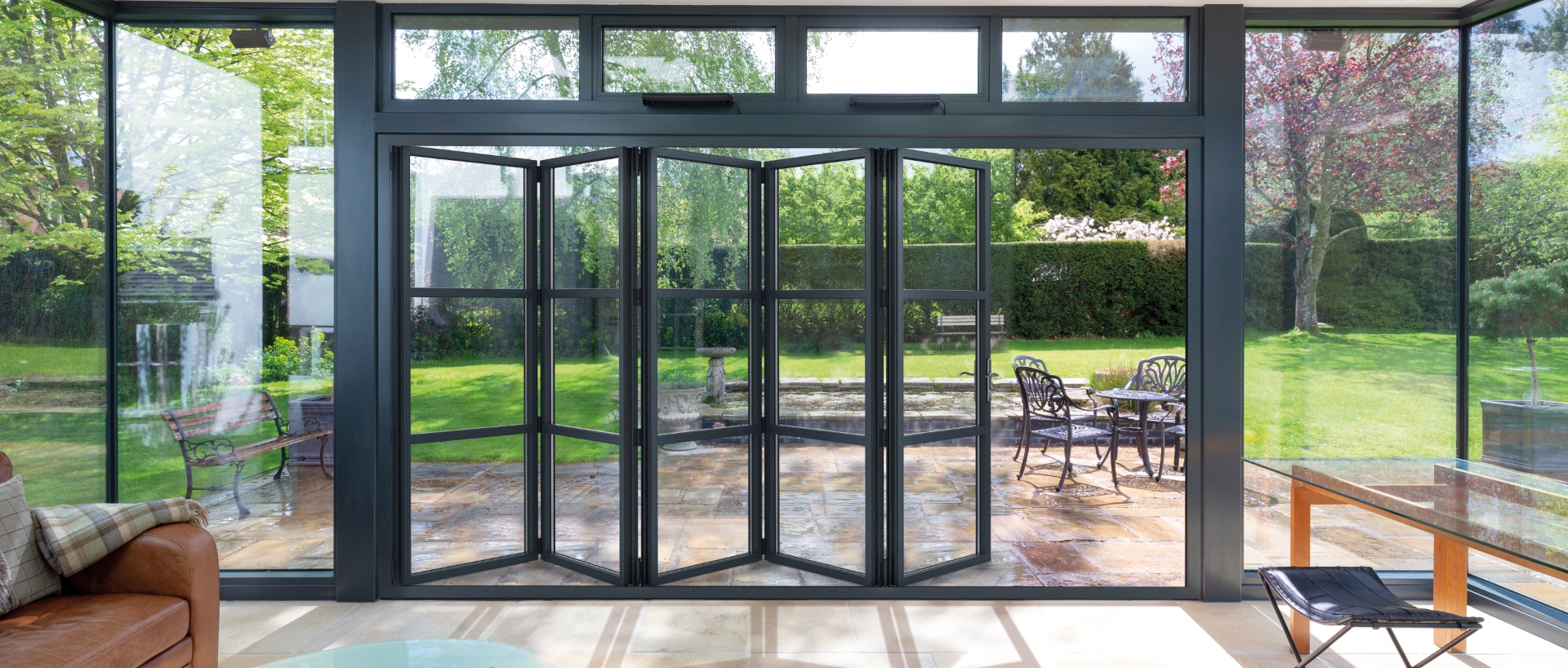
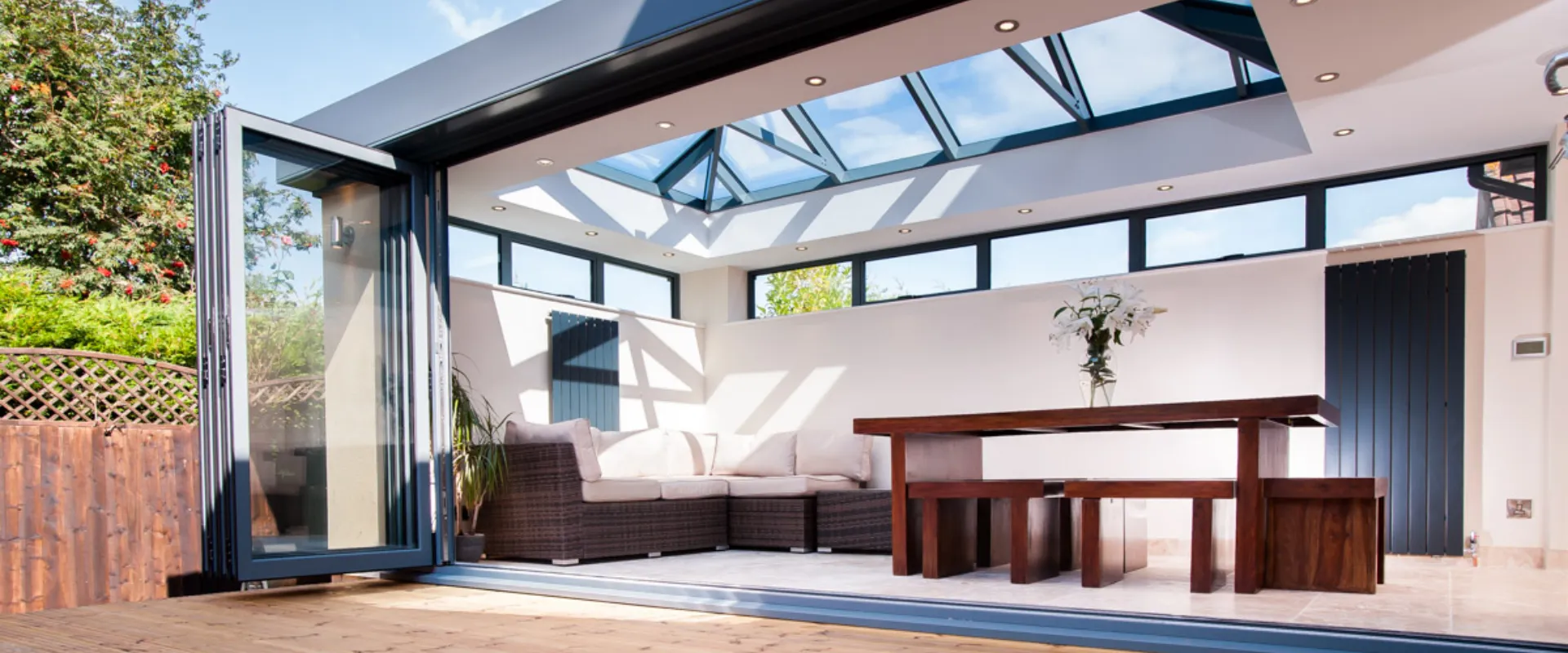
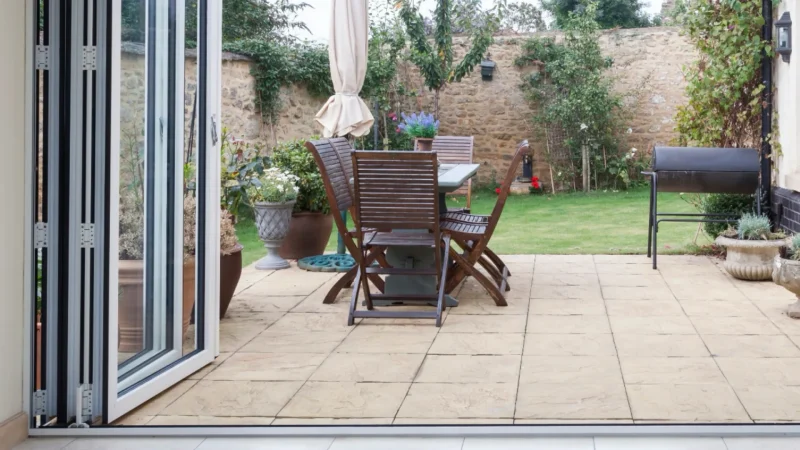
Bifold doors are a great option for opening up a home to the outdoors. Made up of multiple hinged panels, they fold neatly to one side, allowing the entire doorway to be opened. This creates a wide, welcoming space that’s ideal for entertaining, enjoying a summer breeze, or simply letting more natural light in. Slim aluminium frames keep the look stylish and modern while maximising glass area.
Their flexibility is a major advantage. You can open a single panel for quick access or fold the entire system away to create a fully open span. They’re ideal for high-traffic commercial spaces such as cafés, restaurants, and showrooms, as well as residential projects where large openings are needed, like apartment balconies or communal areas with direct access to terraces.
That being said, there are a few compromises. The panels need space to stack when open, and they have more visible frames when closed compared to sliding doors, which can slightly interrupt the view. With more moving parts in the folding mechanism, there’s also a little more to maintain over time.
For projects where creating a fully open wall is the goal, bifolds are an excellent choice. But if the customer values uninterrupted views or has limited space around the opening, sliding doors might be a better fit.
Sliding Doors: Benefits and Use Cases
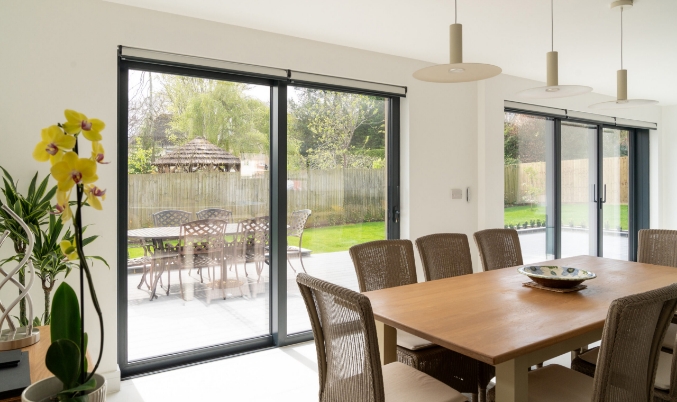
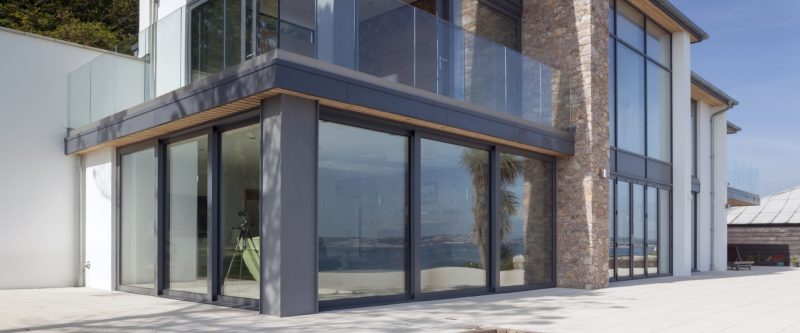
Sliding doors work differently. Instead of folding, large glass panels glide along a track, so they don’t need any extra space when open. This makes them a smart choice in areas where space is tight or where furniture sits close to the opening.
One of their biggest selling points is the view. With fewer frame sections than bifolds, sliding doors offer wide, uninterrupted sightlines that create a strong visual connection to the outdoors, even when closed. Larger panes of glass also bring in more natural light, making interiors feel brighter and more spacious.
They’re particularly effective for framing expansive openings such as terraces, balconies, or outdoor seating areas, and can accommodate large, heavy panels with ease. This allows for impressive, clear spans without sacrificing smooth operation. While sliding systems don’t provide a completely open aperture like bifolds, their slim sightlines, low-maintenance operation, and efficient use of floor space make them a strong choice for commercial fit-outs, multi-unit developments, and high-spec modern builds.
Bifold or Sliding Doors: How to Choose the Right Option for Your Project
Choosing between bifold and sliding doors comes down to the project’s layout, the homeowner’s style preferences, and how they plan to use the space.
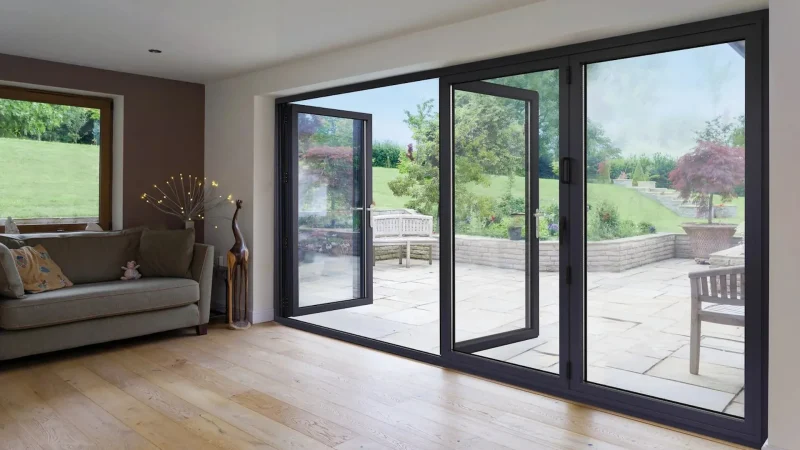
If the aim is to achieve a heritage-inspired look with modern performance, our Visofold 6000 bifold system is ideal. For a versatile bifold that suits both traditional and contemporary projects, the Visofold 1000 Slim offers minimal sightlines and a clean, modern finish.
If uninterrupted views and space-saving operation are the priority, the Visoglide Plus sliding door system is designed for large glass panels, smooth movement, and a panoramic feel that transforms a room.
By guiding customers through these options and matching the right system to their project, you’ll help them make a decision that combines style, practicality, and long-term performance.
Bifold and Sliding Doors from BDC Aluminium: Helping You Make the Right Choice
At BDC Aluminium, we offer both bifold and sliding door systems, each engineered for style, performance, and durability. Whether your project needs the open versatility of a bi-fold or the modern elegance of a sliding door, we have the right solution.
Our team is here to help you choose the best fit, providing expert advice and support from your first enquiry to final installation.
Contact BDC Aluminium today to discuss your project, explore our full product range, and find the perfect door system for your next installation. Call us on 01245 474747 or fill in our contact form to talk with one of our experts.