
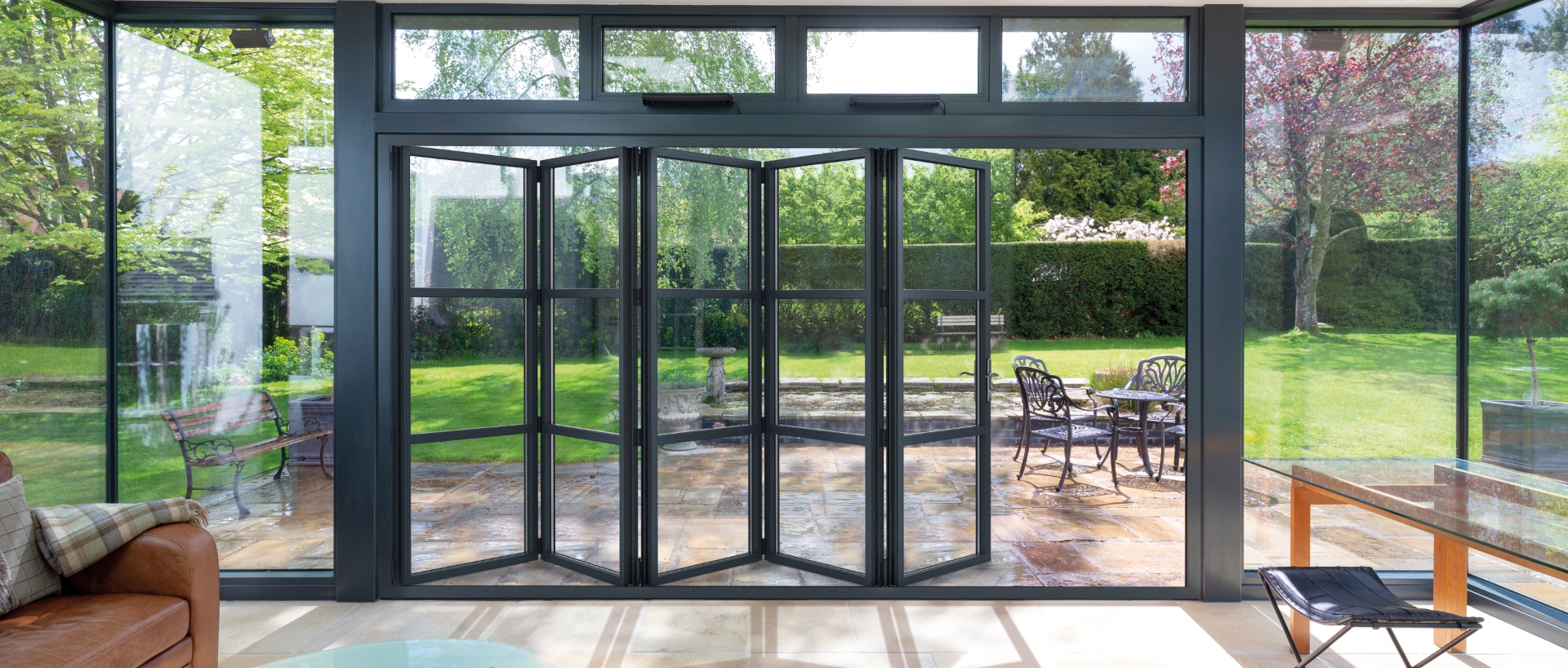
Aluminium Bifold vs Sliding Doors: Which Is Best?

Aluminium Bifold vs Sliding Doors: Which Is Best?

Bifold and sliding doors are both popular choices, but which system is better? While both can create large, glazed openings and stronger connections between indoor and outdoor spaces, they offer different practical and architectural benefits.

For installers, developers and specifiers, the right choice will vary from project to project and should be based on practical and architectural requirements, not aesthetics alone.

BDC Aluminium is a fabricator and supplier offering both aluminium bifold and sliding door systems for a variety of different projects.
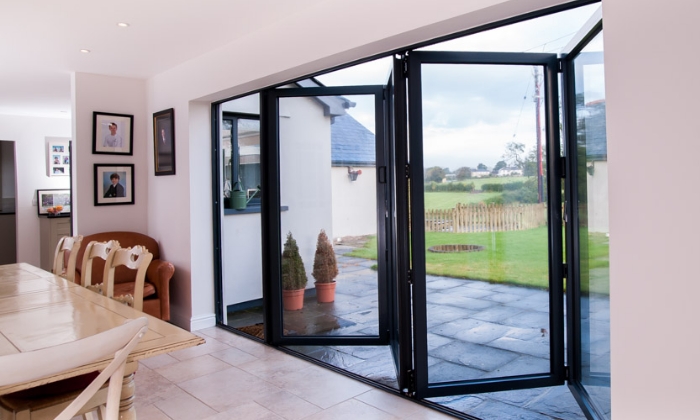
bifold-aluminium-doors

Why Door Choice Matters

Your chosen door configuration can influence usable opening width, sightline size, accessibility, natural light, and the overall project cost. At the specification stage, consider the size and purpose of the opening, available space and wider architectural requirements.

Neither system is universally “better” – each lends itself to different applications and to different requirements.

Benefits of Bifold Doors

Bifold doors fold and stack to one or both sides, allowing a large proportion of the opening to be opened. They’re particularly effective where creating a wide connection between internal and external spaces is a priority.

The inherent strength of aluminium supports slim profiles and generous glazing while providing the durability required for regular use.
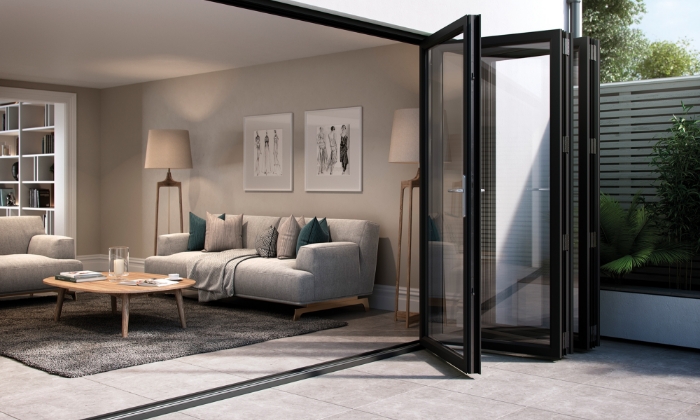
bifold doors bdc aluminium

Benefits of Sliding Doors

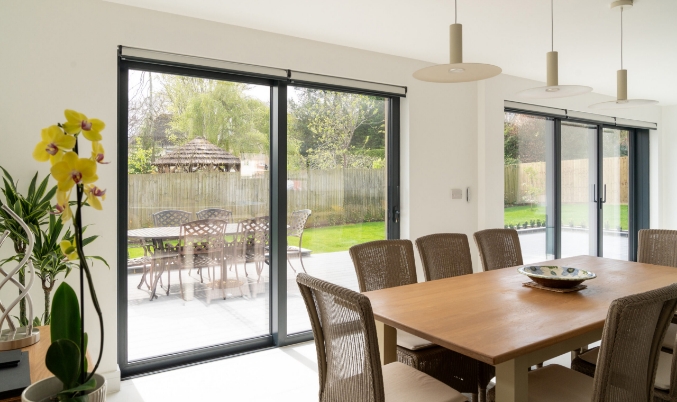
Sliding doors use large glazed panels that move horizontally rather than folding. Their larger individual panes can provide fewer vertical interruptions and expansive views when the doors are closed.

Because their panels don’t fold into the internal or external space, sliding systems can be particularly useful where space around the opening is limited. They’re a strong option for projects prioritising large glazed areas, clean sightlines and contemporary architecture.
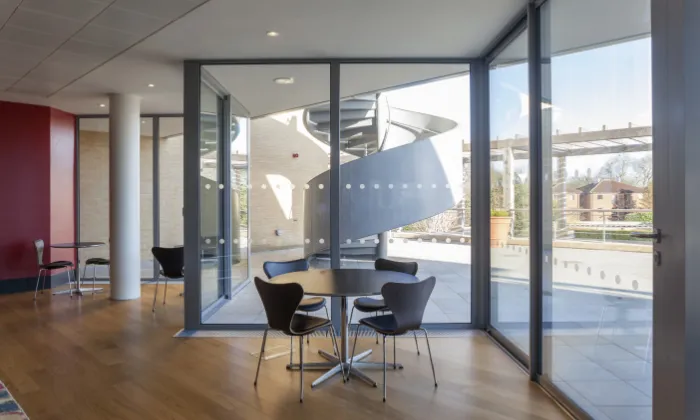
aluminium sliding patio doors

Bifold vs Sliding Doors

FactorAluminium Bifold DoorsAluminium Sliding Doors
Opening WidthPanels fold and stack to create a wide openingPart of the opening typically remains occupied by a fixed or overlapping panel
SightlinesMore vertical profiles due to multiple panelsLarger individual panes can provide fewer interruptions to views
CostDependent on size, configuration and specificationDependent on size, panel configuration and specification

Specify the Right Aluminium Doors with BDC

The choice between bifold doors and sliding doors should come down to the priorities of the project.

Bifolds are particularly effective when maximising the usable opening is a priority, while sliding doors lend themselves to projects prioritising expansive glazing and uninterrupted views.

Explore BDC Aluminium’s bifold and sliding door systems or speak to our team about the right solution for your next project.
Newsletter

Understanding U-Values: What Installers Need to Know
Posted today News

Understanding U-Values: What Installers Need to Know

U-values are among the most important considerations for installers when specifying windows and doors, particularly given the growing emphasis on thermal performance in modern residential and commercial projects. Installers, developers and specifiers must understand what U-values represent and how different system and glazing specifications affect overall performance, helping them make informed specification decisions. As an experienced trade fabricator supplying thermally broken aluminium systems across a wide range of applications, BDC Aluminium are well-positioned to help trade professionals. What Is a U-Value? Put simply, a U-value measures the rate of heat transfer through a building element, such as a window or door. It’s expressed in W/m²K, and the lower the figure, the better the performance. The complete product specification, including the frame, glazing and configuration, influences the U-value, so all elements should be considered when assessing overall thermal performance. Why U-Values Matter for Compliance Thermal performance plays a central role in meeting current Building Regulations and project-specific requirements. Installers and specifiers should therefore ensure that the complete system being supplied achieves the performance required for the application. Requirements can differ depending on the project type and application, so installers and specifiers should confirm the relevant requirements for each project. When specifying, confirm performance figures for the exact system and configuration rather than relying on generic figures. How Glazing Specification Affects U-Values Glazing SpecificationTypical Performance ConsiderationDouble GlazingOffered as standard, with overall thermal performance dependent on the complete system and glass specificationLow-E / Enhanced Glass SpecificationSpecialist coatings and glass specifications can support improved thermal performanceTriple GlazingProvides enhanced thermal performance where supported by the selected system *Actual U-values depend on the individual window or door system, glazing, size and configuration and should be confirmed against the specific project requirements. BDC's Energy-Efficient Aluminium Systems BDC Aluminium's modern thermally broken aluminium profiles are designed to reduce heat transfer through the frame compared with non-thermally broken systems. Our extensive range features windows and doors suitable for different residential, light commercial and commercial applications. Glazing and system specification can be selected around the performance requirements of the individual project. The expert team at BDC is on hand to provide technical guidance when installers and specifiers need help selecting the most appropriate system for their project. Specify with Confidence Understanding U-values helps trade professionals make informed specification decisions and ensure products are appropriate for the intended application. Considering the complete doorset or window rather than glazing performance in isolation helps ensure the selected product meets the requirements of the application. Need help specifying the right aluminium system? Speak to the BDC Aluminium team about the thermal performance requirements of your next project.

© 2026 BDC Aluminium Ltd

Terms and Conditions

CONTACT US

TRADE LOGIN

NEW CUSTOMER